Explore the Roaring Fork Watershed at Night

Fireflies, rare orchids, incredible scenery - these are just a few of our favorite things you'll see at the thermal wetland known as Filoha Meadows. There are four opportunities this month to stay up late and go on a night hike to explore this unique ecosystem. New this year: a morning hike to take a closer look at the orchids and plants at Filoha Meadows. You'll also learn the fascinating history of this area.
July 2 & 15 - Filoha Meadows Evening Exploration (appropriate for ages 12 and up)
July 14 - Orchids & Plants of Filoha Meadows (this takes place in the morning from 7-9am)
July 16 & 21 - Family Filoha Meadows Evening Exploration (appropriate for children of all ages and their families)
These programs fill every year so register early!
Please join the wait list if the program you want to attend is full. Many times we have last minute cancellations and call individuals on the wait list to fill those spots.
|

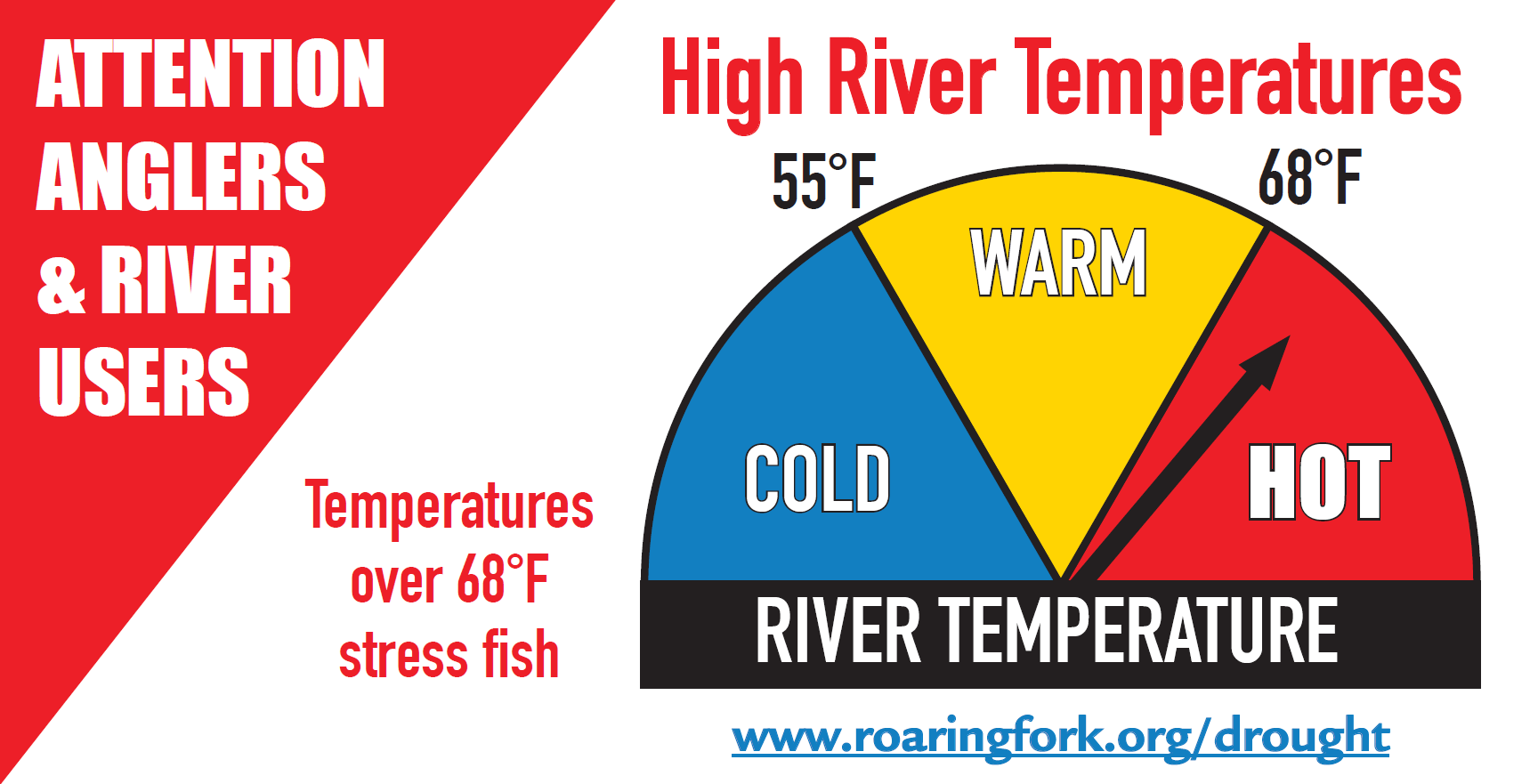
ANGLERS: Please carry and use a thermometerRivers and streams throughout the Roaring Fork Watershed are flowing 1/3 of what is normal for this time of year. |
|---|
Thank You For Being A Pain In The ANS!
On June 27, the Town of Basalt hosted River Jams, which included afternoon kayak and stand up paddleboard races on the Roaring Fork River. Maddie Baker, invasive species specialist with Colorado Parks & Wildlife, also brought a CD3 boat cleaning station and together with RFC staff, taught participants how to protect rivers from aquatic nuisance species (ANS). We would like to thank all the race participants - all of them cleaned, drained and dried their gear, protecting local rivers from ANS! Thank you for being a Pain in the ANS!
.png?width=584px&height=584px)
This silver processing plant was built on the banks of Castle Creek in 1891 by Edward Royal Holden, leading to innovative and sometimes destructive uses of water resources for hydropower and waste disposal. During this program we'll explore the history, the museum, and the remnants of the “Works” (including the reconstructed cable derrick) to learn how one of our most precious resources, freshwater, was utilized in a different era. We'll also examine the effects of time on the riparian area along Castle Creek.
This program is made possible thanks to the City of Aspen Parks & Open Space and is co-hosted by the Aspen Historical Society.
Insects of the Roaring Fork River at Herron Park in Aspen
Monday, July 20 from 12-2pm
If you like rivers, nature or fly fishing, this is a perfect fit! Through a guided exploration of aquatic life in the heart of Aspen, you’ll discover various types of insects that live in the water and play a key role in healthy river ecosystems. With options to get your hands and feet wet (or not!), our knowledgeable staff will be there to help identify these little creatures and correlate them to your favorite fly fishing fly and explain how they serve as indicators of healthy rivers.
This program is appropriate for all ages, but minors must be accompanied by an adult.
Please wear water shoes with good grip and closed-toes, or knee-high rubber boots if you would like to get into the river with RFC educators.
This FREE program is brought to you by the City of Aspen Parks & Open Space.
No need to register. Meet us at Herron Park in Aspen!
Have You Seen an Otter?
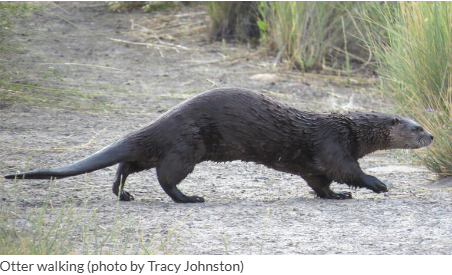
Learn more about this project and how to report sightings HERE.
 |
Double your Impact with a Company MatchBy taking advantage of a company's matching gift benefit, you may be able to double or even triple the amount of your contribution. Ask your HR department today and notify RFC by emailing phoebe@roaringfork.org. |
|---|
|
|
|---|
 |
Consider a Charitable RolloverIndividuals over 70½ may donate to charities directly from their IRA, known as a Qualified Charitable Distribution (QCD). QCDs count towards any required minimum distribution (RMD) an account holder must take from their IRA. With a QCD you can benefit your Roaring Fork Watershed, fulfill your RMD requirement, and exclude that amount from your income. Ask your financial advisor if this is a good strategy for you to support your rivers! |
|---|
|
|
|---|
 |
Would you like to be featured as a Spotlight Business Member?Join us as a Premier Business Member! Show your clients and customers that you support essential river research, education, and conservation work and be featured as a Spotlight Business Member!
|
|---|
Supporting Your Watershed is as Easy as 1-2-3!
 If you have a City Market loyalty card, supporting your watershed is as easy as 1-2-3!
1) Click enroll and log in to your account at www.citymarketcommunityrewards.com
2) Search for Roaring Fork Conservancy or CV113
3) Click Enroll and you're ready to support your rivers while you run errands!
Learn more at: https://www.citymarket.com/account/enrollCommunityRewardsNow/
JULY SPOTLIGHT BUSINESS MEMBER!
Disconnect to re-connect. You’ve worked hard to get here, now let us be your guide to re-connecting with yourself, with your family, or with nature. Perhaps all three. We help you forget technology for a short time as you reap the benefits of experiencing the outdoors in beautiful Aspen Snowmass. Summer in Aspen is an experience in and of itself. Let us take you to the next level by providing you with the best rafting in Aspen, the only guided bike tours of the Maroon Bells, or the most unique dining experience you’ll ever enjoy, our nightly Sunset Dinners.
Adventures | Custom Trips | Groups | Who We Are
INFO@BlazingAdventures.com | 970-923-4544 | Book Now

Thank you for helping protect our rivers and streams!
.png?width=729px&height=383px)